


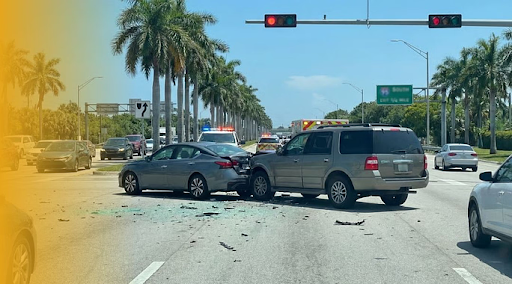
Uninsured/underinsured motorist (UM) coverage can be the difference between a partial payout and a meaningful recovery after a Florida rear-end crash, especially when the at-fault driver carries only minimal insurance. In this case, our client, a 40-year-old man, suffered an acute lumbar herniation with radiculopathy diagnosed by a board-certified neurosurgeon after being rear-ended while stopped in traffic. Despite years of treatment, lost income, and permanent work restrictions, the UM carrier initially offered just $1,500 and disputed that the crash caused the injury. After extensive trial preparation, the carrier tendered the full $250,000 UM policy limits, and with the at-fault driver’s $10,000 coverage, the total settlement was $260,000.
If you are dealing with a rear-end collision claim in Florida and an insurance company is minimizing your injuries, you do not have to navigate that pressure alone. Read on for the case details and the key UM takeaways, and if you want help evaluating your options, call 941-365-7600, use the online form, or live chat with our team.
Case Snapshot
Total Recovery: $260,000
Type of Crash: Rear-end collision while stopped in traffic
Client: 40-year-old man
Key Diagnosis: Acute lumbar herniation with radiculopathy (board-certified neurosurgeon)
Treatment: Physical therapy, epidural steroid injections, nerve blocks, radiofrequency ablations
Work Impact: Out of work 3+ months; permanent light-duty restrictions on return
Insurance Issue: At-fault driver had only $10,000 BI coverage; UM carrier initially denied/minimized the claim
Outcome: UM carrier tendered full $250,000 UM limits, plus $10,000 at-fault coverage
What Happened in This Rear-End Collision
Our client was stopped in traffic when another driver struck him from behind. In the days and weeks that followed, the effects were not “just soreness.” A board-certified neurosurgeon diagnosed an acute lumbar herniation with radiculopathy and directly related it to the crash.
The injury affected every part of daily life. He was out of work for more than three months. When he returned, it was not business as usual. He was placed on permanent light-duty restrictions, a long-term change that can impact earnings, career trajectory, and quality of life.
Over the following years, his condition was managed with conservative and interventional care, including:
- Physical therapy
- Epidural steroid injections
- Nerve blocks
- Radiofrequency ablations
Even with treatment, he continued to live with chronic pain and limitations.
The Insurance Problem: $10,000 Was All the At-Fault Driver Had
Many people assume the at-fault driver’s insurance will cover the harm they caused. In reality, it is common for a negligent driver to carry only minimal bodily injury coverage. Here, the at-fault driver had $10,000 in bodily injury limits.
That is where UM coverage becomes critical.
Florida’s UM statute governs uninsured and underinsured motorist coverage and explains how UM coverage is offered, selected, and applied. (If you have never read what your policy actually includes, you are not alone.)
Our client had the foresight to carry $250,000 in UM coverage. That coverage was available because the at-fault driver’s insurance was not enough to address the real damages from the crash.
When the UM Carrier Offered $1,500, the Real Fight Started
Despite a clear diagnosis, significant treatment, lost income, and long-term restrictions, the UM carrier’s first offer was $1,500.
That number is not a typo. It was a dismissal of the injury, a denial of crash-related causation, and a signal that the carrier was preparing to treat the claim like a nuisance rather than a serious harm.
This is a common pressure point in UM claims. Insurance companies may try to:
- Argue the injury is “degenerative” or preexisting
- Suggest treatment is “excessive” or unrelated
- Minimize radiculopathy symptoms as subjective complaints
- Attack gaps in care or delays in treatment
- Pretend a rear-end crash “cannot” cause significant spinal injury
But rear-end crashes can and do cause serious injury. And Florida law requires drivers to maintain a safe and prudent following distance, which is often central to liability in rear-end cases.
How Trial Preparation Changed the Outcome
This case turned when the carrier understood we were preparing to prove the claim, not debate it. While every case is different, UM claims that ultimately reach full value usually involve hard work in three areas:
1) Proving Medical Causation
Causation is where UM carriers often dig in. Here, the neurosurgeon’s diagnosis and crash-related findings were a foundation. Building a clear medical timeline, correlating symptoms with imaging, and documenting radiculopathy matters.
2) Documenting Real-Life Losses
Time out of work and permanent restrictions are not “paper damages.” They are life damages. Demonstrating the practical impact, including work limitations and chronic pain, helps show why minimal offers are unreasonable.
3) Treating the Case Like It Will Be Tried
Insurance carriers tend to reassess when they see extensive trial preparation. Ultimately, after that work was done, the UM carrier tendered the full $250,000 policy limits.
Why This Case Matters for Florida Drivers
If you only take one lesson from this case, it should be this: UM coverage is often the only path to a full recovery when the at-fault driver carries minimal insurance.
UM coverage exists for the exact scenario our client faced: real injuries, real losses, and an at-fault policy that does not come close to covering the harm.
If you want to learn more about the purpose and structure of UM coverage under Florida law, start with Fla. Stat. § 627.727.
Practical Steps After a Rear-End Crash With Possible Back Injury
If you were rear-ended and you are experiencing back pain, leg pain, numbness, or radiating symptoms, these steps can protect both your health and your claim:
- Get evaluated promptly, especially if symptoms radiate into the leg (radicular symptoms).
- Follow through with recommended care and document your response to treatment.
- Keep a simple pain and function journal (sleep, standing tolerance, work limitations).
- Save wage-loss and work restriction documentation from your employer.
- Request your policy declarations page so you know what UM coverage you actually have.
- Be cautious with recorded statements and “quick settlement” pressure if your symptoms are evolving.
For more information about crash cases our Sarasota-based team handles, visit our Car Accident practice resources.
Talk With a Sarasota UM Lawyer About Your Car Accident Today
If you were rear-ended in Florida and the at-fault driver’s insurance is not enough, or your UM carrier is downplaying your injuries, we can help you understand what coverage exists and what a fair outcome can look like.
Call Dannheisser Injury Law at 941-365-7600, complete our contact form at https://dannheisserinjurylaw.com/contact/, or start a live chat on our website. We are ready to listen, evaluate the facts, and explain the path forward.


